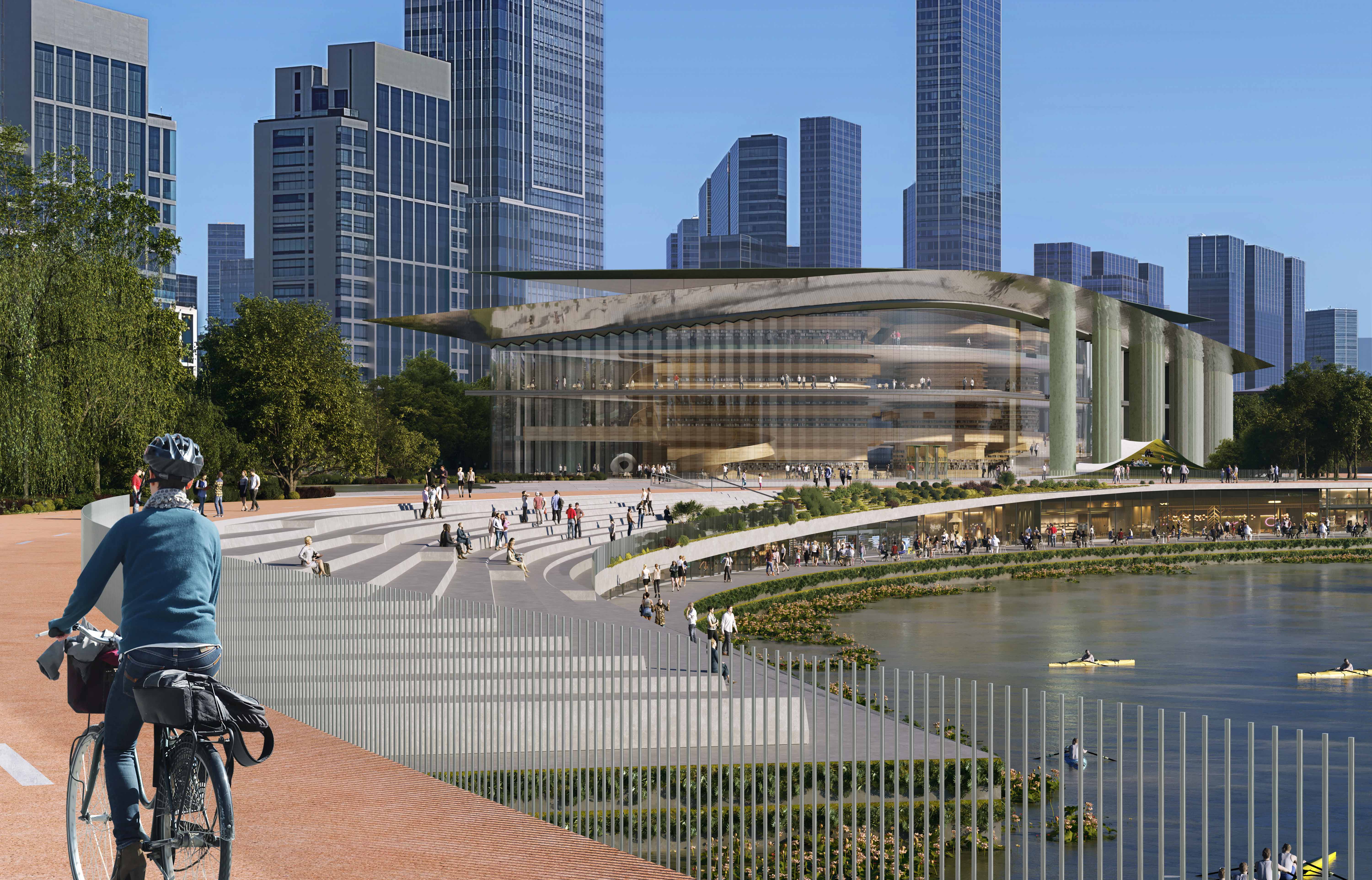
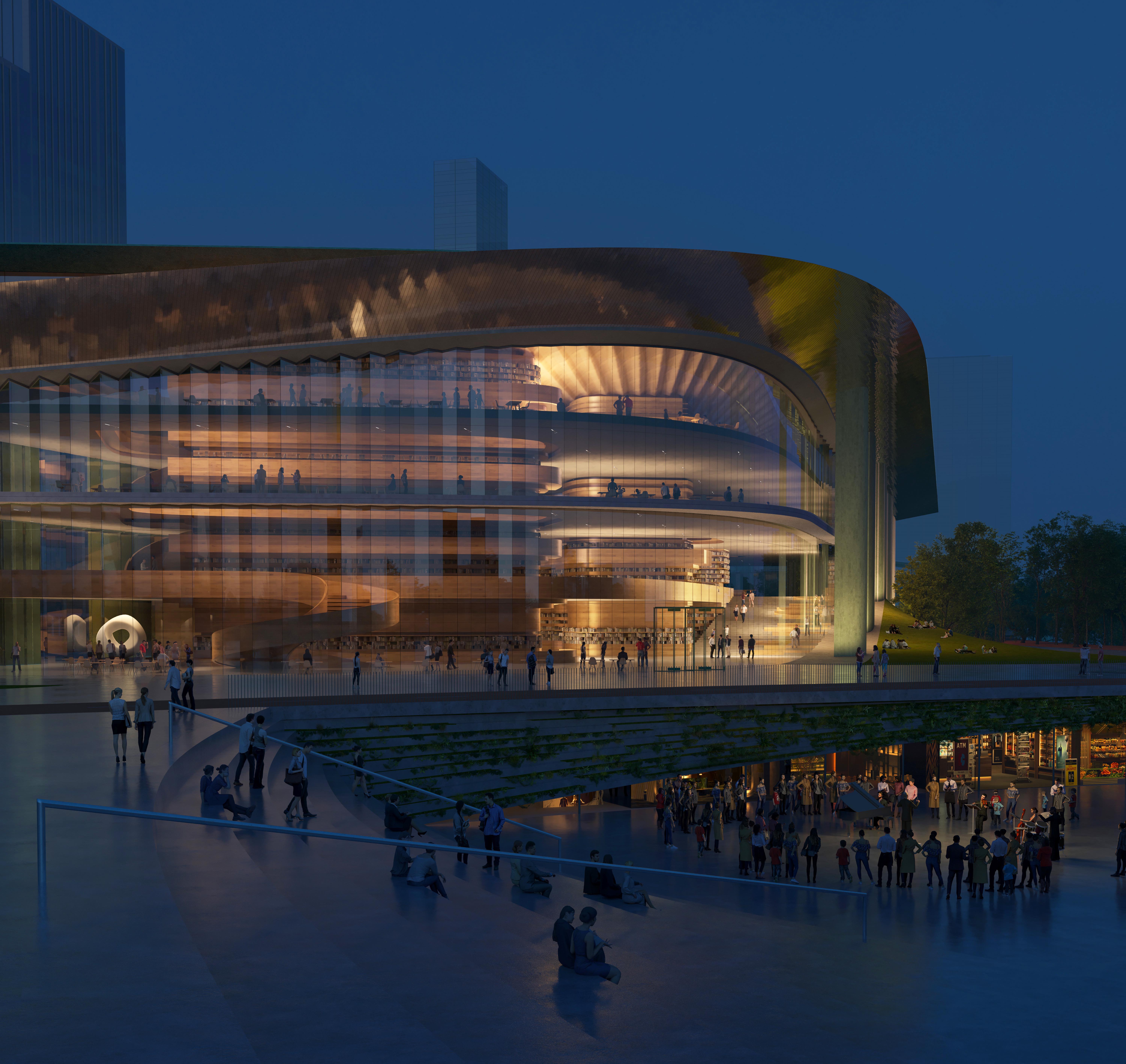
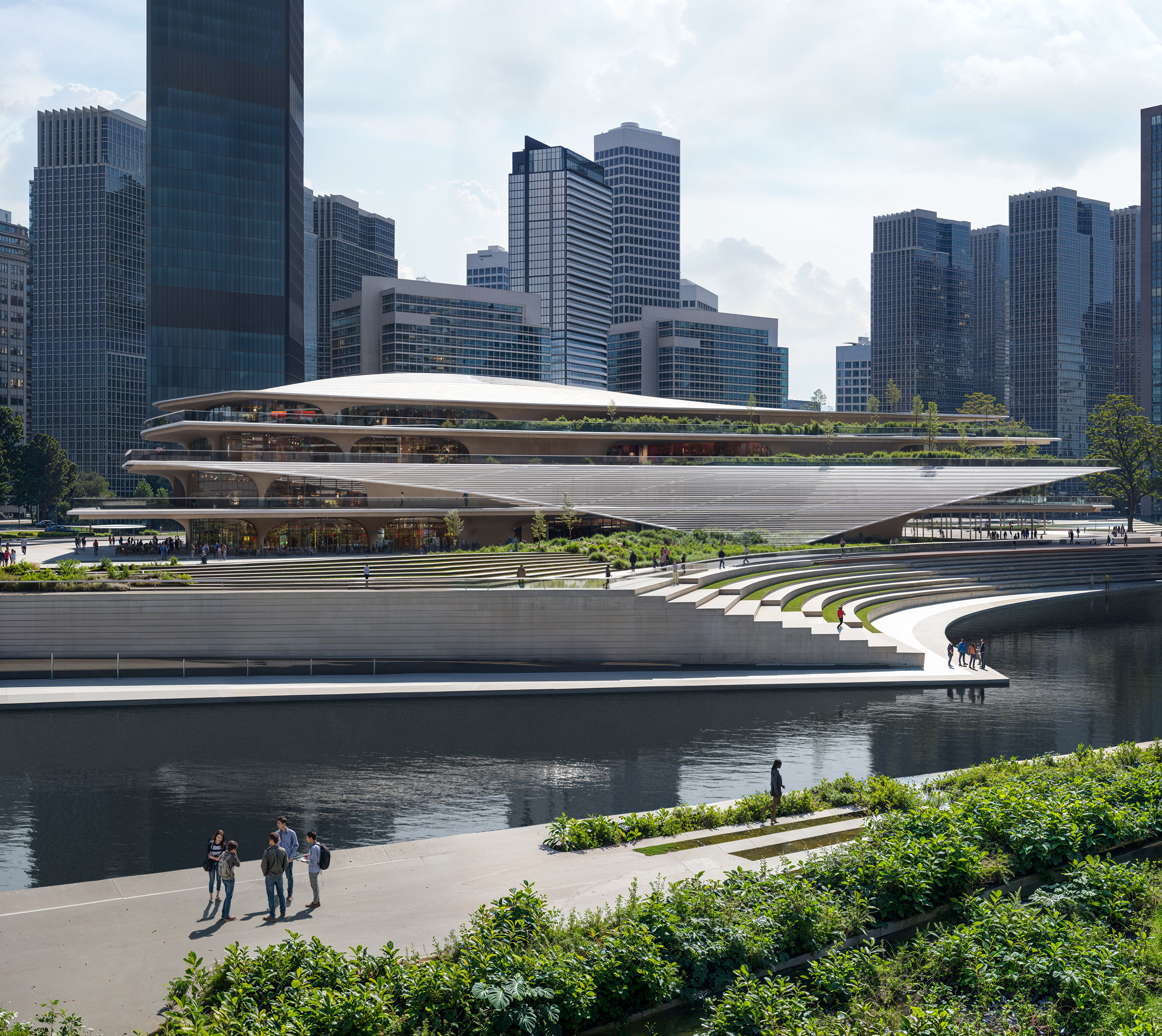
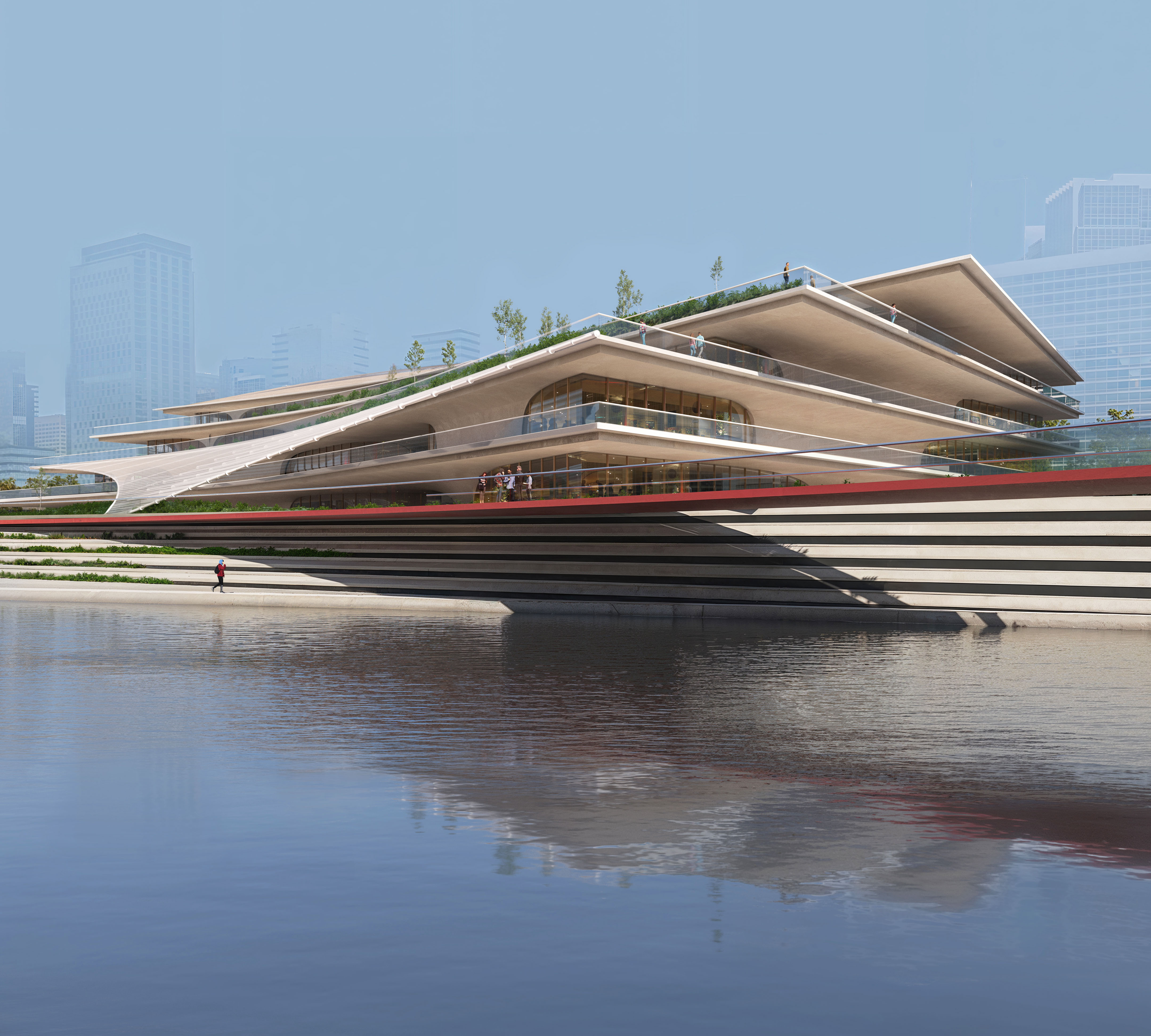
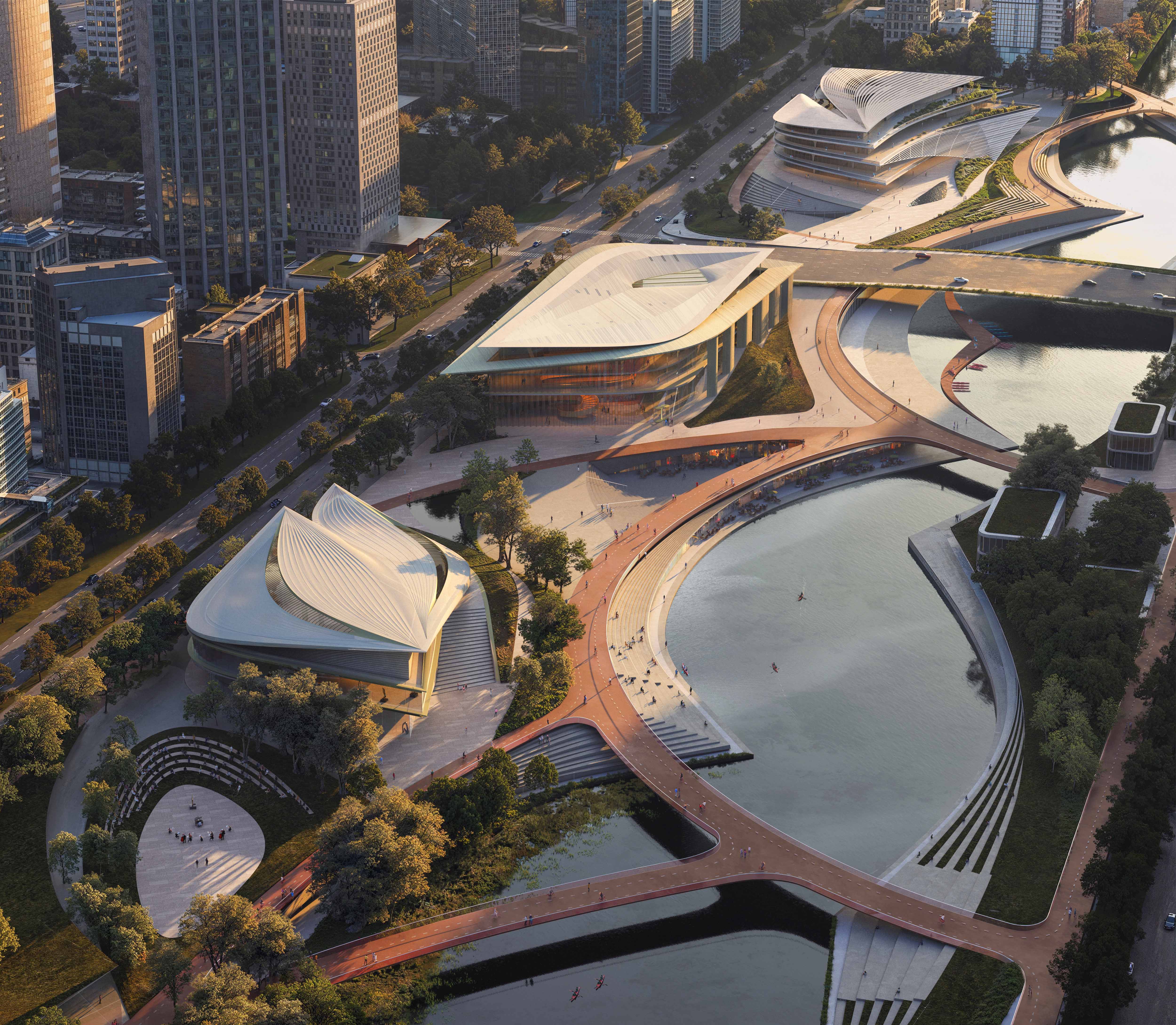
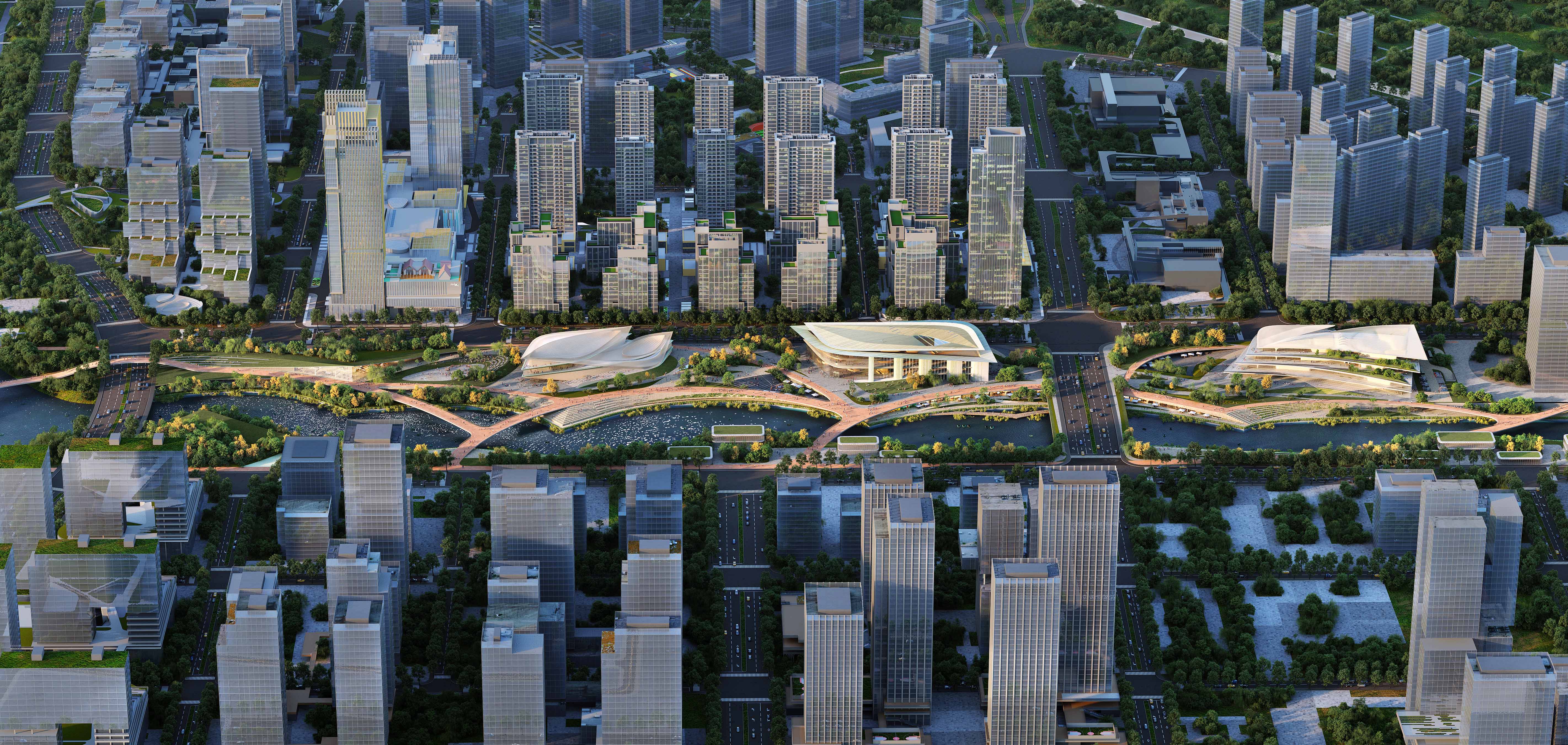
Within these waterside landscapes, cultural and educational buildings line the canal—each orientated and designed to engage with the new civic spaces along the waterfront with plazas, promenades and performance spaces for recreation, relaxation and gatherings.
A network of bridges and paths link both sides of the canal and connect the surrounding city with the landscaped gardens and parks of the new Central Water Axis. Integrated within these new civic spaces, cultural buildings designed by ZHA are defined by the district’s natural terrain, panoramas and viewpoints, in addition to public circulation routes and varying solar irradiation throughout the year.
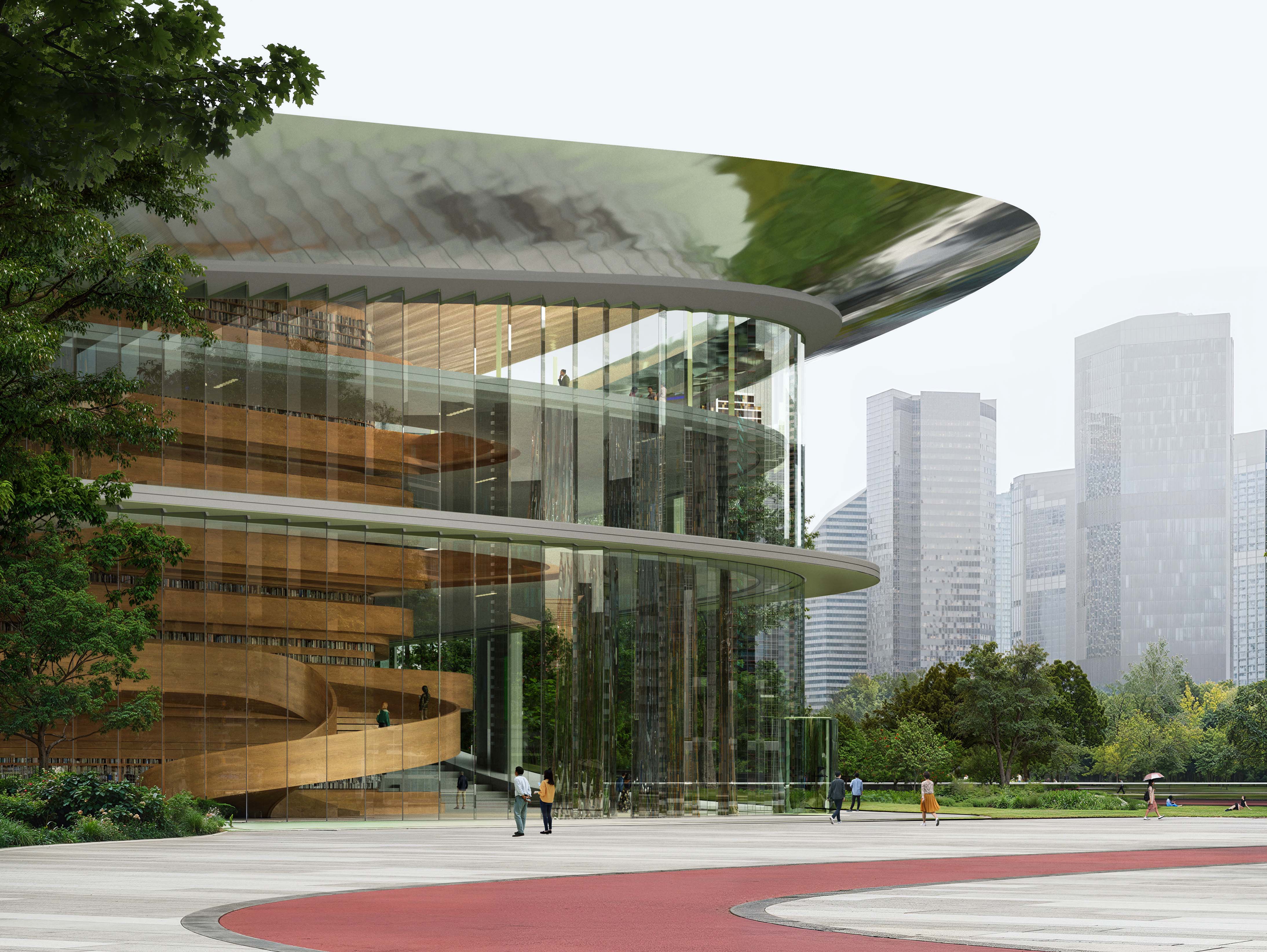
Within this new canal-side cultural district, the library’s design by ZHA incorporates a sequence of inhabitable architectural columns. Serving as structural support and defining the institute’s identity as assembled ‘stones of knowledge’, these columns will accommodate the library’s extensive literary collections and archives, as well as reading rooms and community spaces.
Drawing on the region’s 5,000-year history of jade artistry, the library’s façade is composed of precision crafted masonry tiles inspired by the tonal qualities of this local precious stone. Folded glass elements within the façade diffuse natural light throughout the interiors, providing a soft, luminous ambience tailored for reading, study and reflection, while bringing daylight deep into the building.
Complementing the library, ZHA’s design of the new International Youth Centre offers spaces for the city’s students and visitors to meet and collaborate. The centre’s geometric composition is defined by its waterfront location. These geometries continue within its carved interior as a series of interlinked auditoriums and studios, together with spaces for seminars, conferences, exhibitions and performances. Terraces overlooking the canal extend the centre’s programming outdoors, providing areas for civic gatherings, events and socialising.
Determined by local ecology and climatic conditions, sustainable strategies are embedded within the design to enhance environmental performance across the development using energy-efficient systems and on-site power generation.
Integral to Hangzhou’s sponge-city infrastructure established to prevent flooding, the Central Water Axis landscape incorporates permeable surfaces, planted swales, and water-retention features that enhance stormwater management—creating a low-impact, high-performance civic environment which supports Hangzhou’s long-term ecological health and contributes to the resilience of the city.