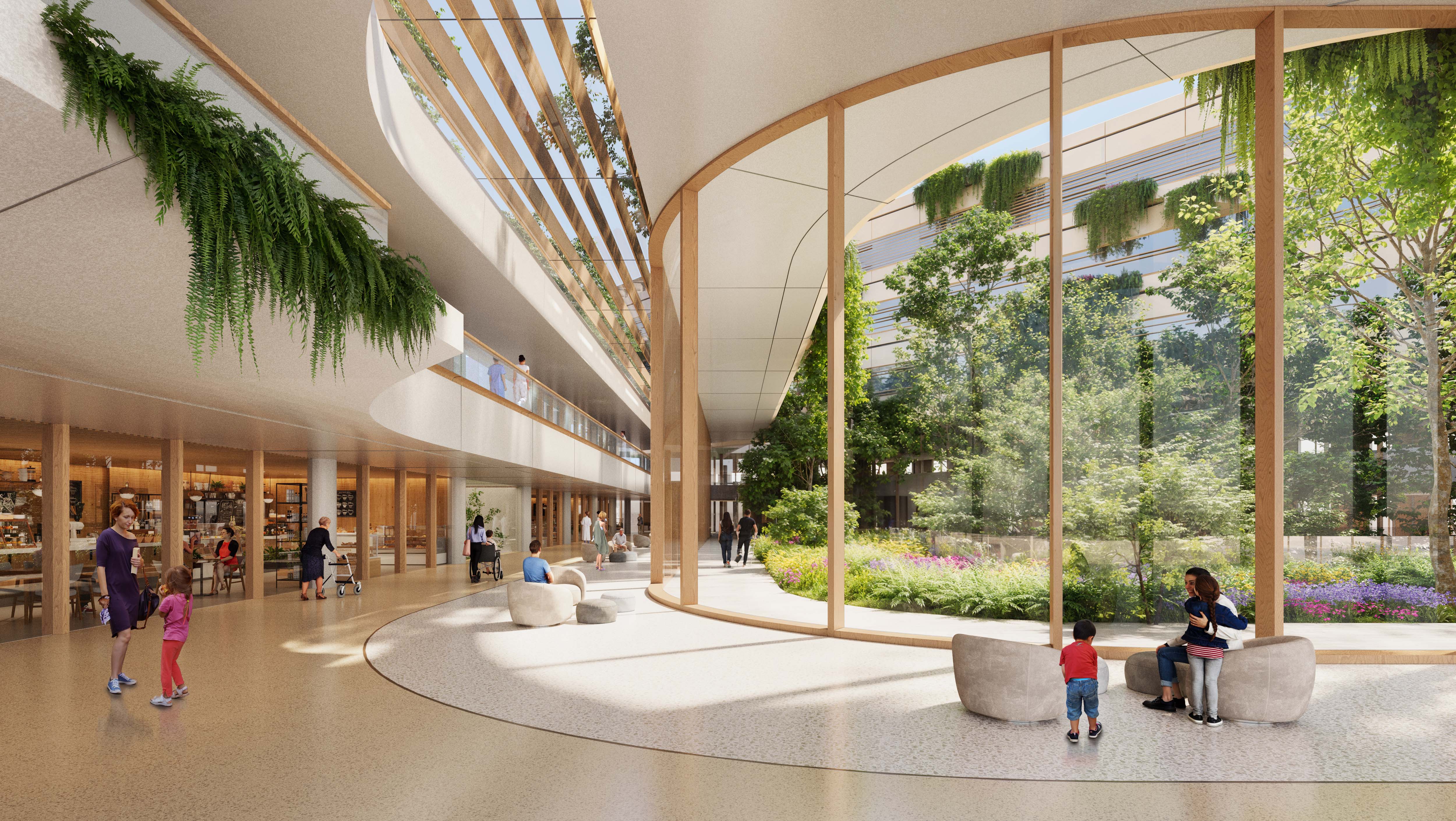
The new hospital’s design addresses three fundamental priorities: meeting the region’s growing demand for healthcare, integrating advanced medical technology with human-centric design and ensuring the community has access to medical services of the highest quality.
The project represents the holistic integration of healthcare innovation, local heritage preservation and ecological regeneration, creating an inclusive and sustainable campus to serve its community today while adapting to the needs of tomorrow.
Designed to respond to evolving health challenges and climate conditions, the hospital’s modular construction enables future expansion and rapid reconfiguration in emergencies. This approach meets the growing healthcare needs of the region while combining advanced medical technologies with a design focused on individual comfort.
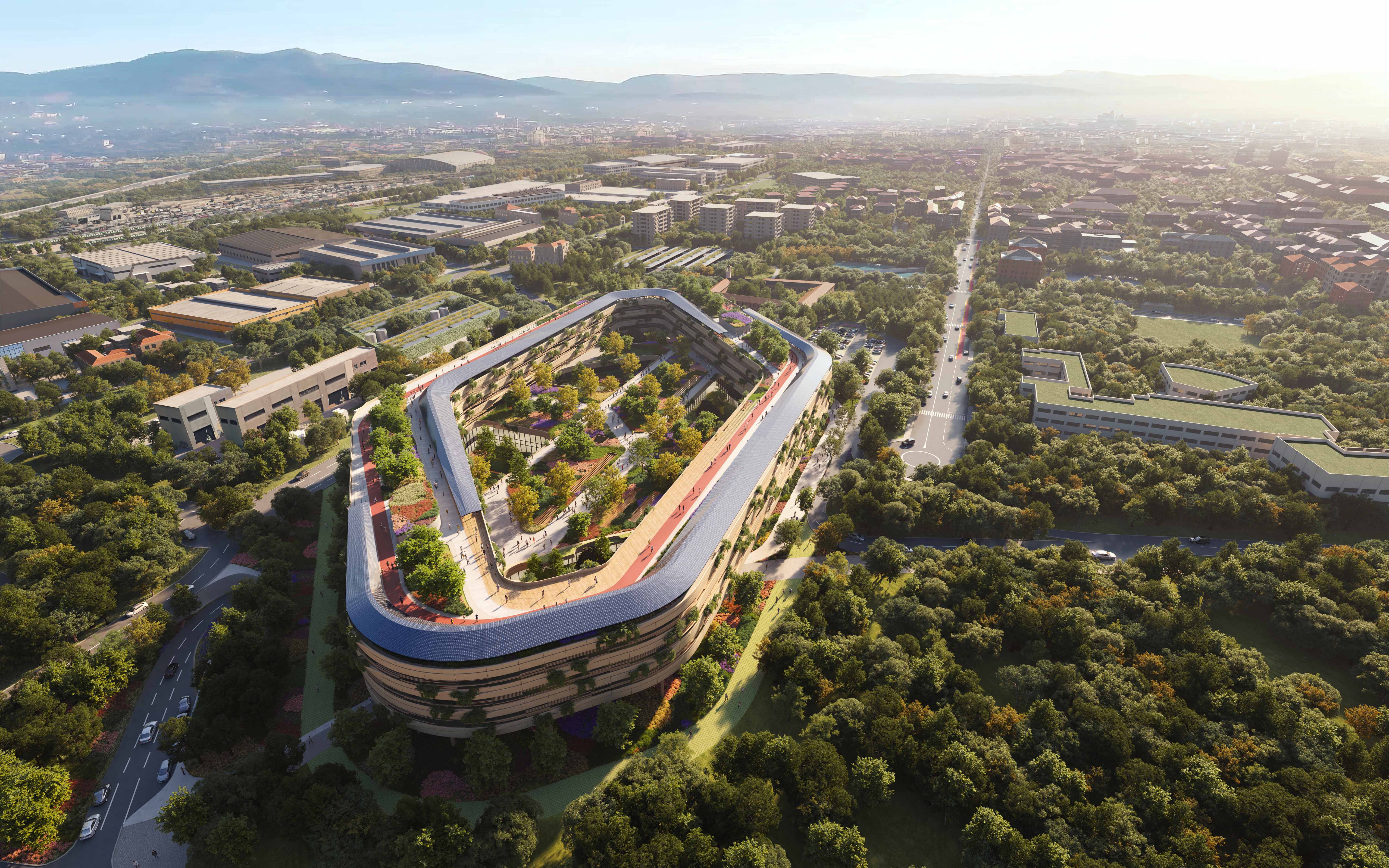
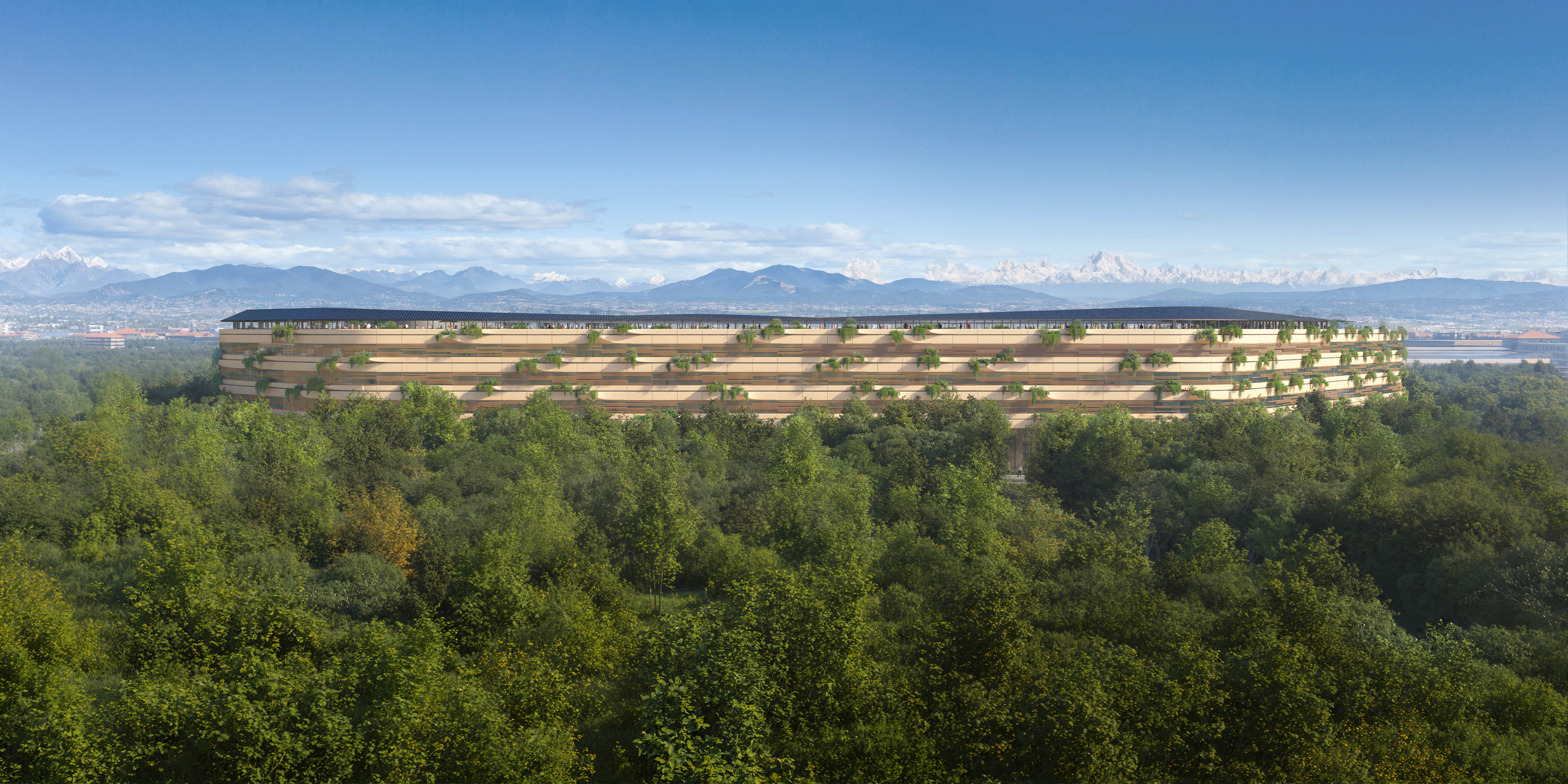
A compact structure comprising five above-ground levels and one basement, the hospital will encompass approximately 90,000 sq. m organised by intensity of care that includes emergency services, surgery and critical-care within a multifunctional operating block with radiology, interventional and diagnostic rooms.
The hospital will incorporate extensive outpatient and inpatient facilities, maternal and infant care wards in addition to diagnostic and therapy zones with treatment rooms. The design also accommodates first and second level clinics, further clinics for maternal-infant healthcare, together with specialist areas for rehabilitation, laboratories and logistics. Every facility within the hospital is designed to be easily reconfigured to meet evolving needs.
The hospital’s dedicated circulation pathways for visitors, patients, staff and goods will minimise interference and reduce risk of contamination, with a clear separation between the routes used by the public and routes used by technicians and healthcare providers. Separate elevators for medical materials, goods and waste are strategically located to avoid interference with patients and visitors. The installation of an automated delivery system throughout the hospital will ensure patients and staff benefit from the most efficient logistical services.
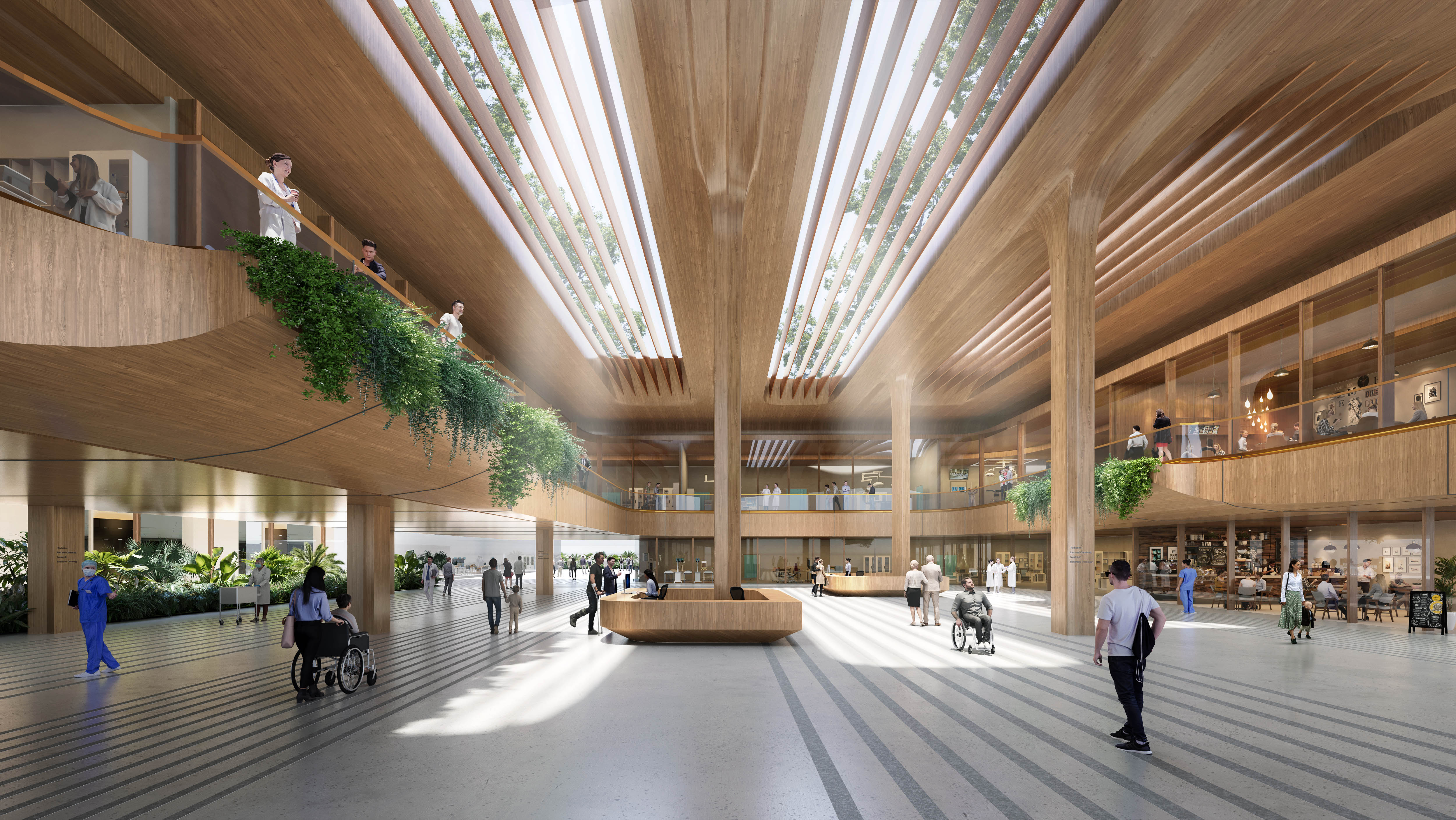
The design prioritises privacy and comfort to reduce anxiety by creating respite zones for patients and staff alike. At ground level, a central “Main Street” acts as a public axis, linking the entrance plaza and landscaped areas, reinforcing accessibility and community integration. Indoor spaces are defined to optimise natural light and acoustic comfort, creating an environment that supports health and well-being.
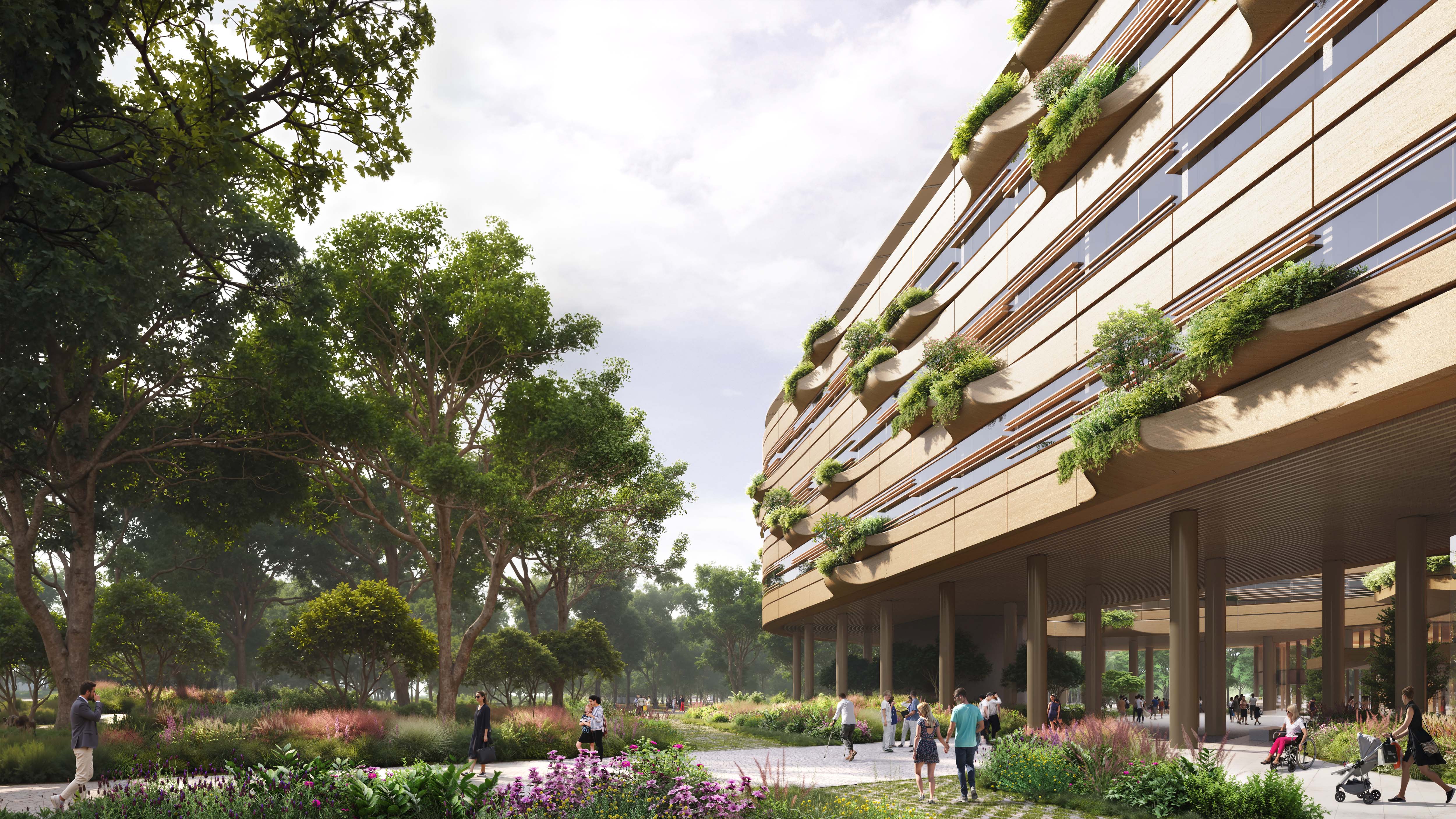
Human-centric design principles underpin the architecture—providing gardens, courtyards and landscaped rooftop terraces offering a variety of different spaces for rehabilitation and relaxation. The interiors are composed with a material palette promoting a therapeutic environment. Areas for socialising, education and cultural activities will enable the hospital to cultivate the strongest relationships with its local communities to enhance every aspect of patient care, while universal design integrates tactile maps, multilingual signage and barrier-free circulation.
The site is rich in natural heritage, surrounded by forests and agricultural land within the Regional Ecological Network and close to the Parco Regionale della Valle del Ticino. Embracing biophilic principles, the hospital’s landscape design preserves these ecosystems, minimizing hydrological impact, and also embedding the historic Cascina dei Poveri—an ancient rural complex dating to the 12th–13th century—within the campus, honouring its heritage and creating a new gathering place for the local community.
Incorporating effective passive design strategies, the hospital is designed to exceed CAM compliance environmental performance standards, with the potential to achieve the highest sustainability certification using renewable energy sources and the implementation of smart building systems.
Seamlessly connected to its surrounding communities by a network of dedicated public access routes from Via Quintino Sella and SS33, the new hospital can also be accessed via its extensive public transport links, cycling paths and pedestrian walkways.
The facades of the new medical campus comprise modular aluminium rainscreen panels with integrated planters and solar shading chosen for durability, recyclability and low embodied carbon. Interiors feature natural finishes such as wood and textiles to enhance the sense of comfort, calmness and security for all patients, visitors and staff.
Employing advanced modular prefabrication technologies to reduce waste, investment and construction time, all materials are selected for their low CO₂ footprint, recycled content and compliance with rigorous EPD and LCA standards. Operational efficiency throughout the campus is enhanced by a high-performance building envelope and solar shading to reduce cooling demand by 30%, while a photovoltaic system exceeding 1 MWp will supply roughly a quarter of the hospital’s electricity needs. A hybrid heating system is prepared for hydrogen integration, ensuring long-term adaptability.
Designed with the possibility to incorporate new smart technologies including advanced building management systems and digital twin models, the project has the capacity to implement the most effective predictive maintenance programmes and optimise energy performance.
Preserving existing woodland while introducing new wetlands and bioswales to capture and reuse stormwater and enhance biodiversity, the landscaping of the campus will include new public parks and gardens with drought-resistant planting to reduce evaporation and irrigation demand.
Embedded within its surrounding natural environment, Malpensa Hospital will provide the highest quality of patient care in an innovative, climate-responsive and human-centred medical campus, unifying advanced healthcare and responsible ecological stewardship of the Olona Valley.